


The global carbon fiber industry continues to gain momentum as leading manufacturers unveil advanced carbon fiber materials, commercialize sustainable composite solutions, and expand applications across transportation, hydrogen energy, infrastructure, consumer electronics, and sporting goods. Recent developments from major industry participants highlight how carbon fiber is evolving from a niche aerospace material into a mainstream engineering solution supporting lightweighting, durability, and decarbonization.
Material innovation remains at the forefront of industry growth. Companies including SGL Carbon, Toray Industries, Hexcel, Teijin Carbon, Aksa Carbon, and Shanghai Petrochemical have introduced new high-performance carbon fibers, prepregs, reinforcement fabrics, and large-tow products designed to improve strength, manufacturing efficiency, and cost competitiveness. At the same time, recycled and bio-circular carbon fiber solutions such as Toray Performance Materials' Stratex™ 2300r, Teijin Carbon's Tenax Next™ portfolio, Aksa Carbon's RForce recycled carbon fibers, and HEAD's BOOM RAW tennis racquet demonstrate the industry's growing focus on circular economy initiatives without compromising mechanical performance.
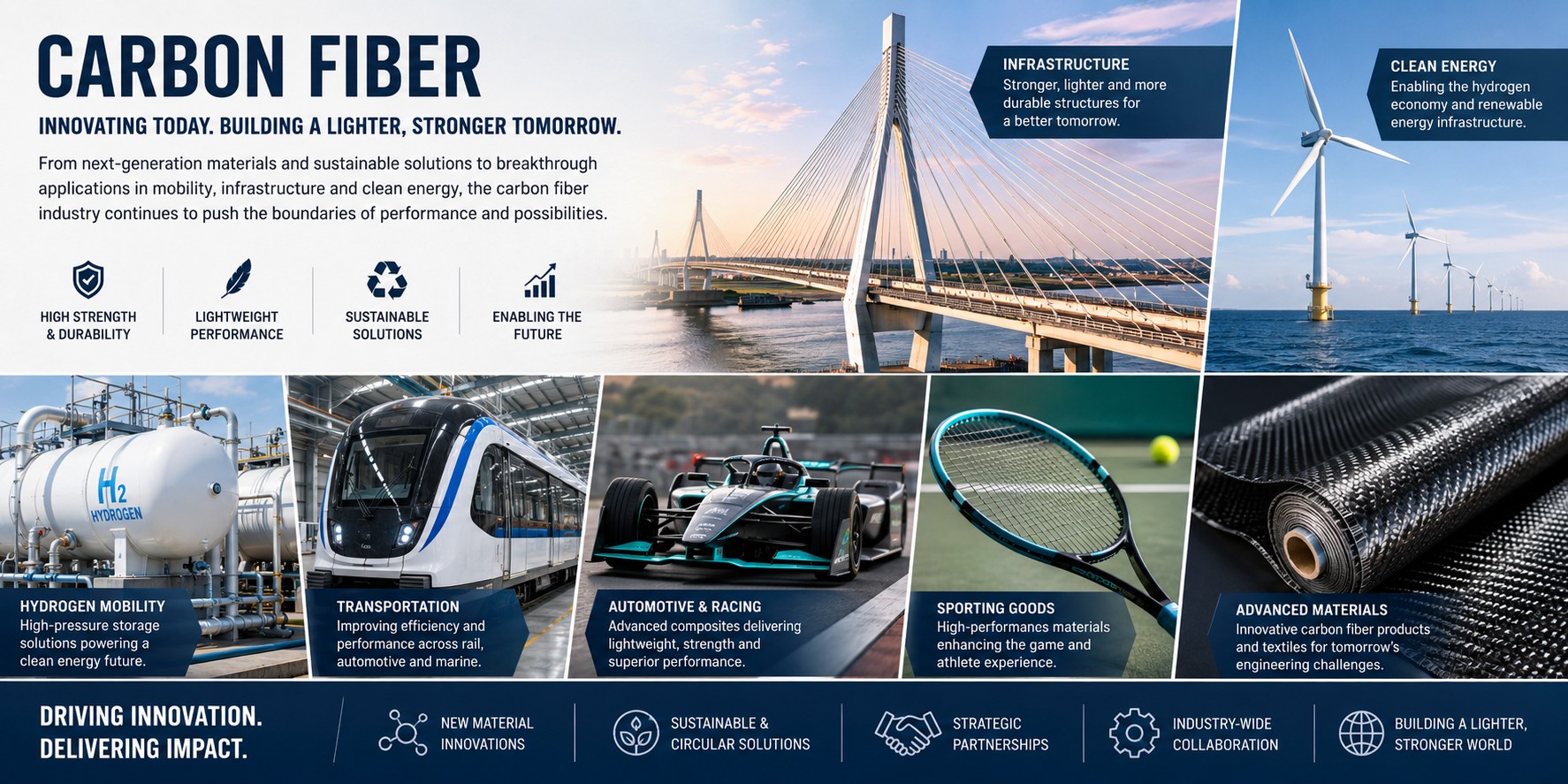
Hydrogen mobility continues to emerge as one of the strongest demand drivers for advanced carbon fiber composites. New carbon fiber materials for high-pressure hydrogen storage vessels, advanced composite pressure vessels, fuel cell gas diffusion layers, and hydrogen system components are supporting the expansion of clean energy infrastructure and fuel cell electric vehicles. These innovations reinforce carbon fiber's critical role in enabling lightweight, high-strength solutions for the hydrogen economy.
The transportation sector is also experiencing broader adoption of carbon fiber technologies. Landmark projects such as the world's first commercial carbon fiber metro train, advanced Formula E suspension components, lightweight composite marine vessels, and next-generation mobility collaborations highlight the material's expanding role in improving energy efficiency, structural performance, and sustainability across automotive, rail, and marine applications.
Infrastructure has become another significant growth area for carbon fiber composites. Carbon fiber-reinforced bridge structures, composite reinforcement systems for civil engineering, and record-breaking carbon fiber cable applications in large-span bridges demonstrate the increasing acceptance of advanced composites in critical infrastructure projects. These solutions deliver lower weight, improved corrosion resistance, extended service life, and reduced lifecycle carbon emissions compared with conventional steel-based designs.
Industry collaboration is further accelerating market development. Strategic agreements between automotive manufacturers, composite suppliers, and material technology companies are strengthening carbon fiber supply chains while enabling faster commercialization of advanced composite materials across aerospace, defense, renewable energy, mobility, and industrial sectors.
As manufacturers continue investing in sustainable materials, recycled carbon fiber technologies, hydrogen applications, and high-performance composite solutions, the carbon fiber industry is positioned for continued expansion. The latest product launches, infrastructure projects, and strategic partnerships underscore the growing importance of carbon fiber as a key material supporting next-generation lightweight engineering and global sustainability objectives.