


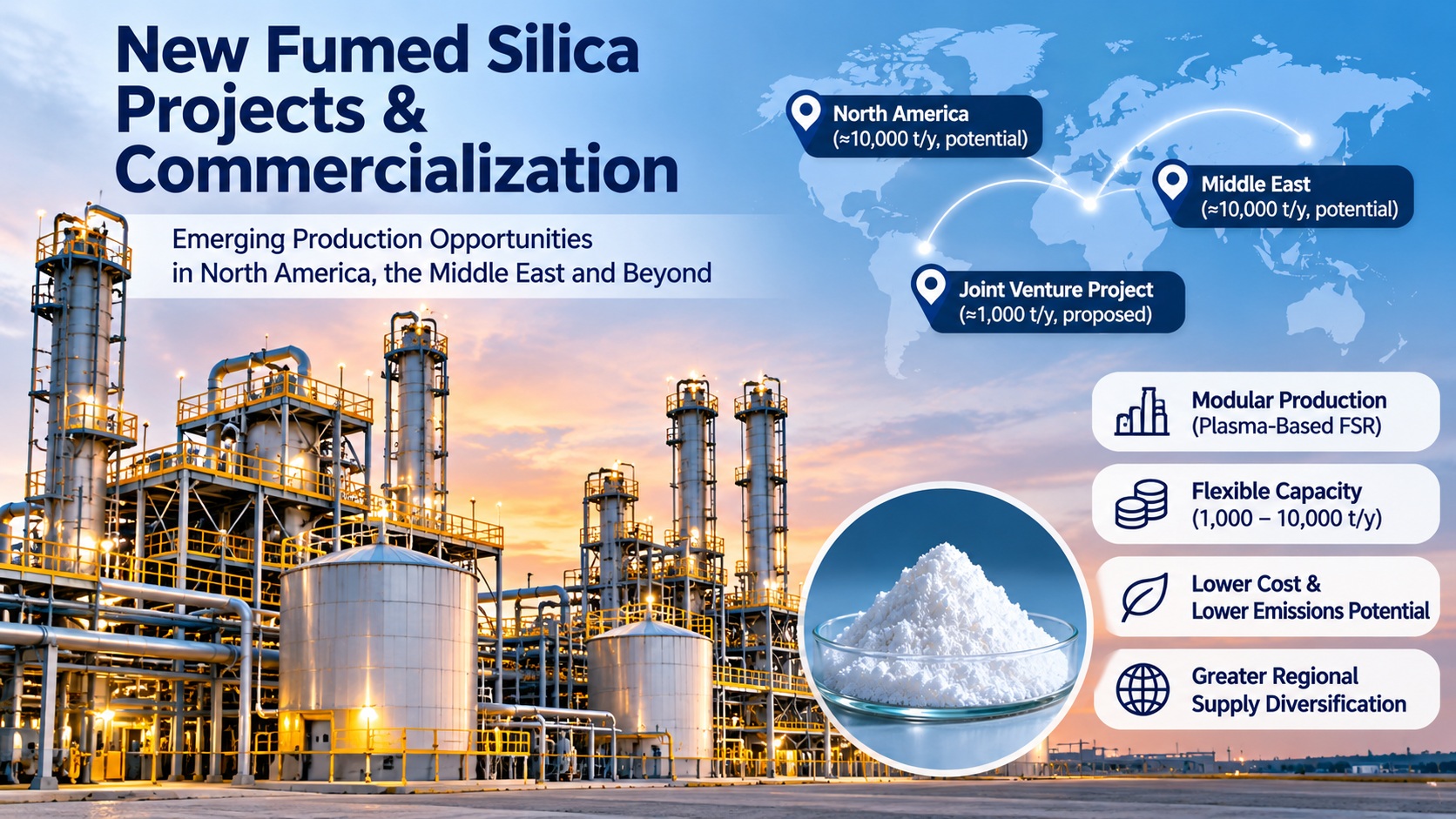
There are new projects emerging in the fumed silica space to help add some diversity to production capacity in the global market. HPQ Silicon and PyroGenesis have both recently entered into commercial talks which suggest an opportunity for modular fumed silica production facilities in North America and the Middle East using PyroGenesis’ own Fumed Silica Reactor (FSR). While these projects are still at an early stage they reflect the increased interest in different production options.
Modular Manufacturing Could Create New Production Opportunities
Fumed silica is typically produced using specialist production methods and silicon based chemical supply chains. PyroGenesis’ Fumed Silica Reactor (FSR) technology developed for HPQ Silica Polvere produces fumed silica directly from quartz using plasma technology. This eliminates chlorosilane feedstocks and therefore offers flexibility in production location. These features have caught the attention of potential customers.
Proposed 1,000-Tonne Fumed Silica Joint Venture
In August 2026 PyroGenesis revealed they were in commercial talks to set up a joint venture to create a fumed silica production facility with a production capacity of ~1,000 tonnes per year. This will provide fumed silica for a new application downstream. PyroGenesis will provide the reactor system for ~US$20M. Initial talks had stalled due to differences in commercial terms including IP, exclusivity and costs. Discussions resumed in September 2026 after suggested changes to the deal but no joint venture has been confirmed.
North American Fumed Silica Production Opportunities
PyroGenesis revealed they were in talks with a potential customer in Asia who were interested in setting up a fumed silica production facility in North America. Initial talks centered around supplying large quantities of product but could also include setting up a production facility in the region using FSR technology. The potential customer was looking to initially supply several reactor systems with a production capacity of ~10,000 tonnes per year. This could help increase supply in the region and provide an alternative to importing. However, these are just potential opportunities.
Middle East Emerges as a Potential Manufacturing Location
They have also revealed they are in talks with an existing customer to set up a fumed silica production facility in the Middle East. Initial talks included setting up a facility with a production capacity of ~10,000 tonnes per year. This could help increase supply in the region. However, this is still at an early stage with no confirmation of investment.
What Do These Projects Mean for Global Fumed Silica Capacity?
HPQ and PyroGenesis have also been in talks with a major player in the fumed silica industry after successfully validating the FSR technology at pilot scale. They have been discussing the potential commercial opportunities. This demonstrates there is commercial interest in the new production method from a major player in the industry. However, no confirmation of any commercial opportunities.
What Does This Mean for Global Capacity?
These projects could help create a more diverse production network. However, these are still at an early stage and should not be seen as additional capacity. This will ultimately depend on any definitive agreements being signed, funding being secured, scaling up the technology, building the facility and successfully commissioning it. With the fumed silica industry looking at future investments in production, modular technologies could provide new opportunities to increase supply in the region. Ultimately this will depend on successfully commercializing the technology.
For a detailed assessment of established manufacturers, regional production capabilities, and anticipated supply developments, refer to ChemInsider Market Intelligence's fumed silica production capacity forecasts through 2031.
Sources: PyroGenesis, August 17, 2026; HPQ Silicon, September 29, 2026.