


The global fumed silica market has seen significant pressure on prices in 2025 - 2026 with increased raw material costs, supply chain issues and international transport complications. However, improved supply and expected normalization in upstream supply chains is set to see moderated prices in 2027. Manufacturers and end-users will be looking at balancing the increased costs against the increasing demand for specialist grades.
Fumed Silica Prices Have Increased
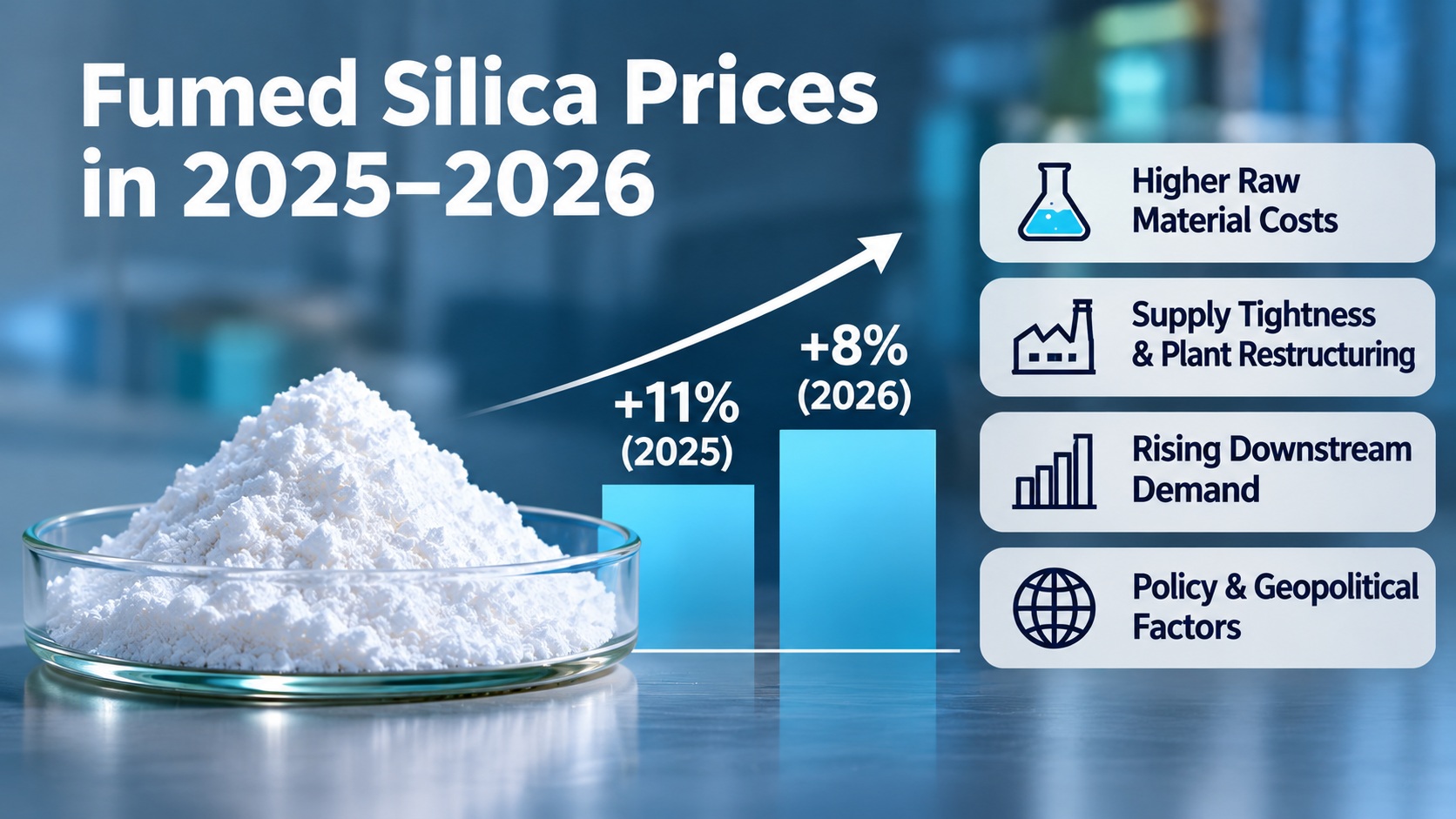
In April 2026, average ex-factory prices have increased by around 11% in 2025 and another 8% in 2026. This means that there has been an overall increase of around 20%. However, these prices depend on the grade, supplier, location and agreement. The main driver has been the increased cost of silicon-based chemicals used in the production of standard grades. Products like methyltrichlorosilane and silicon tetrachloride are key feedstocks for the upstream supply chain.
Increased Demand on Raw Materials
The demand for high purity silicon materials within the fiber optics and electronic industries has caused competition for some of the upstream raw materials. This means that manufacturers will be looking at securing their raw material supplies, integration and good supplier relationships. Fumed silica manufacturers will see an increase in feedstock prices due to reliance on external sources.
Manufacturing Rationalization
Leading manufacturers have announced changes to their manufacturing sites. Evonik have announced they will shut down their Waterford site in New York and Cabot have announced they will stop producing their primary fumed silica at Barry, Wales. This shows that there is an attempt to centralize manufacturing and reduce costs. Although shutting down manufacturing can have an effect on regional supply, depending on where the production moves to and how other sites are being utilized it won’t have a large impact on the global supply.
Fumed Silica Demand Is Still Strong
Fumed silica is still showing strong demand due to its uses in controlling rheology, reinforcement and thickening. Major uses include silicone rubbers, adhesives/sealants, coatings, cosmetics, pharmaceuticals and specialist materials. Interest in new areas such as battery materials for electric vehicles, electronics, photovoltaics and high-performance silicones is causing increased demand for high-performance grades.
International Transport Issues
International transport has also had an impact on the cost of fumed silicas. The disruption to international shipping routes, such as in the Red Sea area and increased shipping and energy costs have caused increased costs on some international deliveries. This has caused increased costs to purchase fumed silica in certain regions and has caused manufacturers and end-users to look at their supply chains.
Fumed Silica Price Outlook for 2027
Despite the price increases, ChemInsider Market Intelligence expect to see pressure ease as supply improves. More product will become available from well-known manufacturers and upstream raw materials will return to normal. This will cause prices to fall. Overall, average prices are expected to fall back to 2024 levels throughout 2027.
Fumed Silica Market Outlook to 2031
Looking beyond 2027, prices will continue to be driven by manufacturing capacity, regional demand, feedstock availability and demand for specialist grades. Continued investment into improving manufacturing, targeted expansion and new manufacturing methods may also have an impact. Although demand is increasing for high-performance grades, improved supply may mean prices do not increase significantly. Overall, the global fumed silica market is expected to become more balanced throughout the forecast period.
A comprehensive analysis of consumption growth, regional demand patterns, and future industry developments is presented in ChemInsider Market Intelligence's fumed silica market size, demand and price outlook.
Source: Industry pricing commentary, April 2026; ChemInsider Market Intelligence analysis and projections.