


The global allulose market is experiencing an unusual combination of strong consumption growth and substantial manufacturing overcapacity, creating downward price pressure while potentially improving the ingredient's long-term competitiveness in sugar-reduction applications.
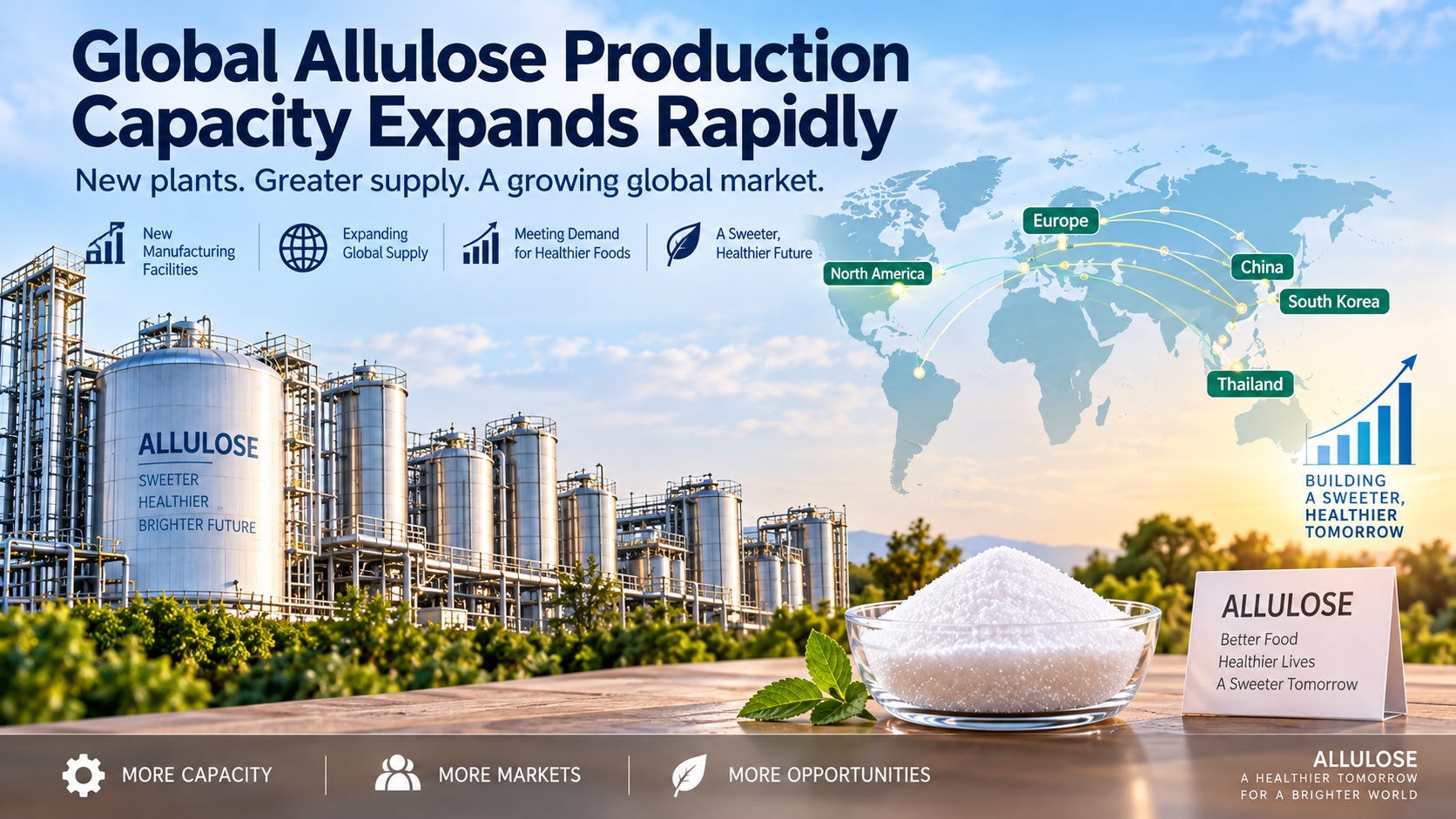
Global allulose consumption is projected to reach 87 thousand tonnes in 2031 and continue expanding as allulose adoption increases across food and beverage applications. Production capacity, however, has grown much faster. Global capacity is projected to increase from approximately 15 thousand tonnes in 2021 to around 310 thousand tonnes in 2031. Consequently, the demand-to-capacity ratio declined from 67.4% in 2021 to approximately 28.2% in 2031.
This capacity imbalance has affected market value despite increasing physical consumption. Global allulose market value increased from $99.2 million in 2021 to $118.5 million in 2022, before falling to $89.7 million in 2024. Market value recovered moderately to approximately $94.3 million in 2025.
The divergence between rising consumption volumes and weaker market value reflects significant price declines as new manufacturing capacity entered the market.
While overcapacity creates pressure on producers, declining prices could also improve allulose's competitiveness relative to conventional sugar-reduction systems and broaden its potential use across mass-market applications.
Demand growth is being supported by the wider shift toward sugar-reduced foods and beverages, regulatory expansion, increasing new-product activity, and the ingredient's functional characteristics. Allulose provides approximately 70% of sucrose's sweetness while offering functional properties such as browning and humectancy.
The industry is therefore entering a period in which improving capacity utilization will become increasingly important. Strong consumption growth alone may not immediately eliminate excess supply, particularly as additional manufacturing projects come online.
For producers, the challenge is shifting from establishing manufacturing capacity toward securing downstream demand, lowering costs, developing applications, and building distribution networks capable of absorbing rapidly expanding supply.